Guide
Best Non-Alcoholic Wine: How to Choose a Bottle That Belongs at the Table
A practical guide to choosing premium non-alcoholic wine by style, dryness, structure, food pairing, and occasion.
Published September 22, 2026 · 7 min read
Start with real wine, not an imitation
The best non-alcoholic wine begins as wine. Grapes are harvested, pressed, fermented, and guided through the cellar before alcohol is removed. That sequence matters because fermentation creates aroma, texture, acidity, tannin, and savory complexity that grape juice cannot develop on its own. When a bottle is simply a sweet beverage with wine-like flavoring, it can be pleasant, but it rarely has the dryness or length that makes wine useful with food.
Rayner Mansion is positioned around that cellar-first approach: tradition preserved, alcohol removed. For shoppers, this is the first question to ask. Was the wine traditionally fermented before dealcoholization, or was it assembled to resemble wine after the fact? The difference is especially clear in red styles, where tannin and bitter cocoa notes help the wine carry grilled meat, mushrooms, and aged cheese.
Choose by structure, not just color
Color is helpful, but structure is more useful. A dry red should have enough tannin and savory depth to stand up to richer food. A Chardonnay should have breadth and a calm finish for roast chicken, shellfish, or cream. A Sauvignon Blanc should bring lift, brightness, and aromatic clarity. The best bottle is the one whose structure matches the way it will be served.
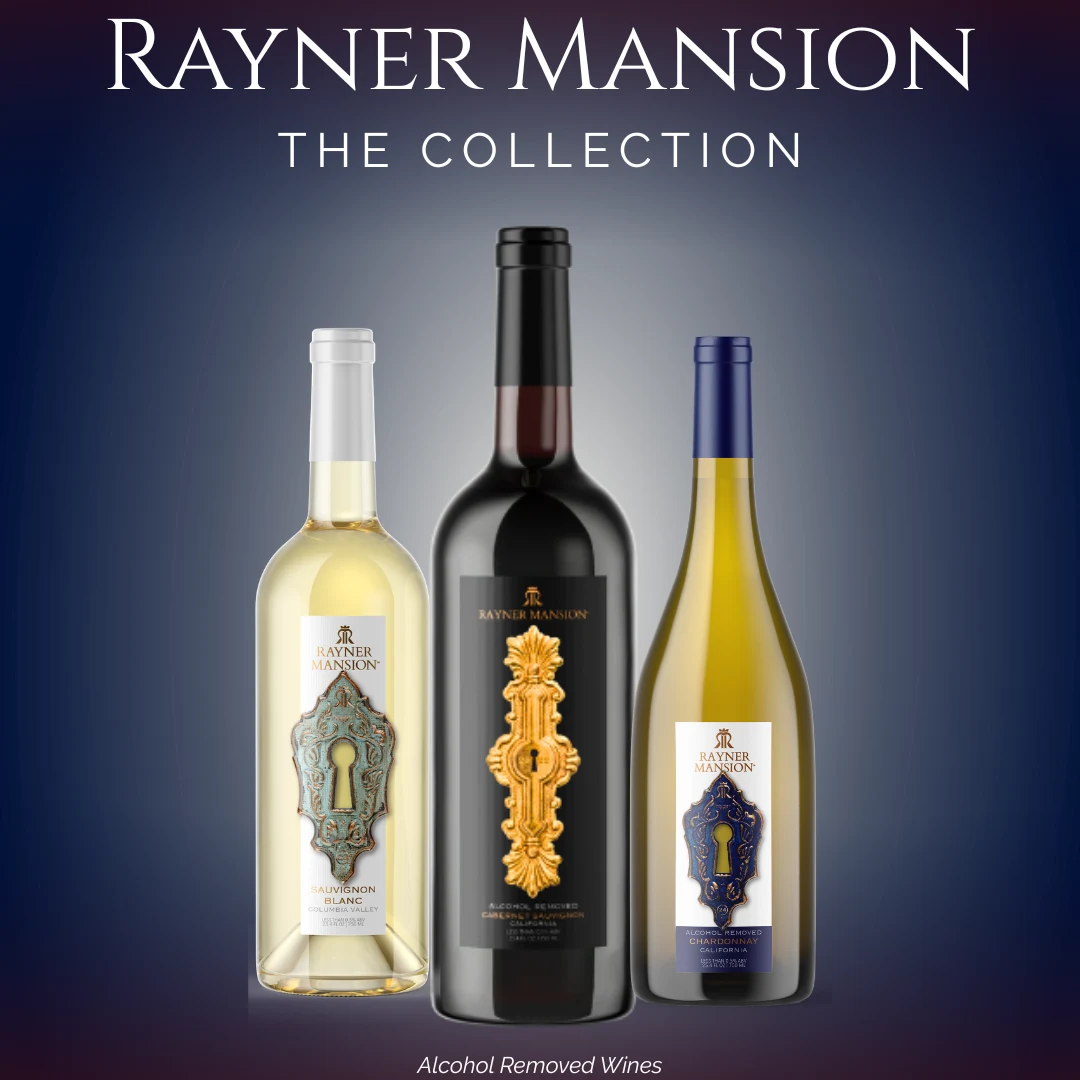
For a formal dinner, start with Cabernet Sauvignon if the menu includes steak, lamb, venison, tomato sauce, or mushroom risotto. For a lunch, shower, or seafood menu, Chardonnay is the more graceful choice. For aperitif service, raw bar, citrus, herbs, or goat cheese, Sauvignon Blanc brings the cleanest edge.
Look for dryness and balance
Many alcohol-removed wines use sugar to replace the body that alcohol once carried. A little residual sugar can round edges, but too much turns the wine into something closer to juice. A premium bottle should read as dry or nearly dry, with acidity, aroma, and texture doing the work. Balance is the goal: enough fruit to feel generous, enough structure to feel adult, and enough restraint to invite another sip with food.
When tasting at home
Use real wine glasses, serve at the correct temperature, and give the wine a few minutes after pouring. Non-alcoholic wines can seem muted straight from a very cold refrigerator. A short rest in the glass often lets aromatics return and gives red wine tannins a softer impression.
Match the bottle to the occasion
The right non-alcoholic wine should remove friction from hosting. At a wedding toast, the bottle needs to look considered and feel celebratory. At a corporate dinner, it should sit comfortably beside the rest of the beverage program. At home, it should be easy to pair with a real meal rather than reserved for abstinence-only moments. That is why presentation, label quality, and service cues matter alongside flavor.
Rayner Mansion’s Cabernet Sauvignon has already earned a Silver Medal and 93 points at the 2026 International Non-Alcoholic Competition by Trade Buyers, while the front label received a 2026 Graphic Design USA award. Those proof points do not replace tasting, but they signal that the wine is built for tables where quality and appearance both count.
Begin with the Tasting Collection
The three-bottle set lets a table compare Cabernet Sauvignon, Chardonnay, and Sauvignon Blanc side by side without guessing which style will suit the evening.
Shop the non-alcoholic wine tasting collectionFeatured internal links
Shop the bottles behind this guide.
Shop non alcoholic Cabernet Sauvignon
A structured California red for savory dinners and formal tables.
Shop non alcoholic Chardonnay
A dry California white for roast chicken, shellfish, and composed lunches.
Shop non alcoholic Sauvignon Blanc
A bright Columbia Valley white for aperitif service, seafood, and celebrations.
Learn how dealcoholized wine and alcohol removed wine are made
Follow Rayner Mansion's fermentation-first process from wine to finished bottle.
Related guides
6 min read
Does Non-Alcoholic Wine Have Alcohol? Understanding Less Than 0.5% ABV
A clear explanation of alcohol levels in dealcoholized wine, labeling language, serving expectations, and pregnancy guidance.
8 min read
How Non-Alcoholic Wine Is Made: Fermentation First, Alcohol Removed Gently
Learn how premium non-alcoholic wine is traditionally fermented, dealcoholized, balanced, finished, and served.