
Guide
Non-Alcoholic Wine Calories: What Shapes a Glass
Understand what contributes calories to non-alcoholic wine, why sugar matters, and how to read product information clearly.
Published September 22, 2026 · 6 min read
Calories come from more than alcohol
Alcohol contributes meaningful calories in traditional wine, so removing alcohol often lowers the total. But calories do not disappear entirely. Residual sugar, grape solids, and finishing choices can still contribute energy to a glass. That is why two non-alcoholic wines can differ even when both sit below 0.5% ABV.
The most useful number is calories per serving, usually a five-ounce pour. It should be read alongside residual sugar and style. A dry red with structure may feel very different from a sweet sparkling beverage even if both are labeled non-alcoholic.
Dryness matters
Some alcohol-removed wines add sweetness to replace the roundness that alcohol once provided. This can make a wine taste fuller at first sip, but it may also make pairing harder. Dryness gives a bottle more range with dinner. It lets acidity refresh the palate and allows savory foods to remain savory.
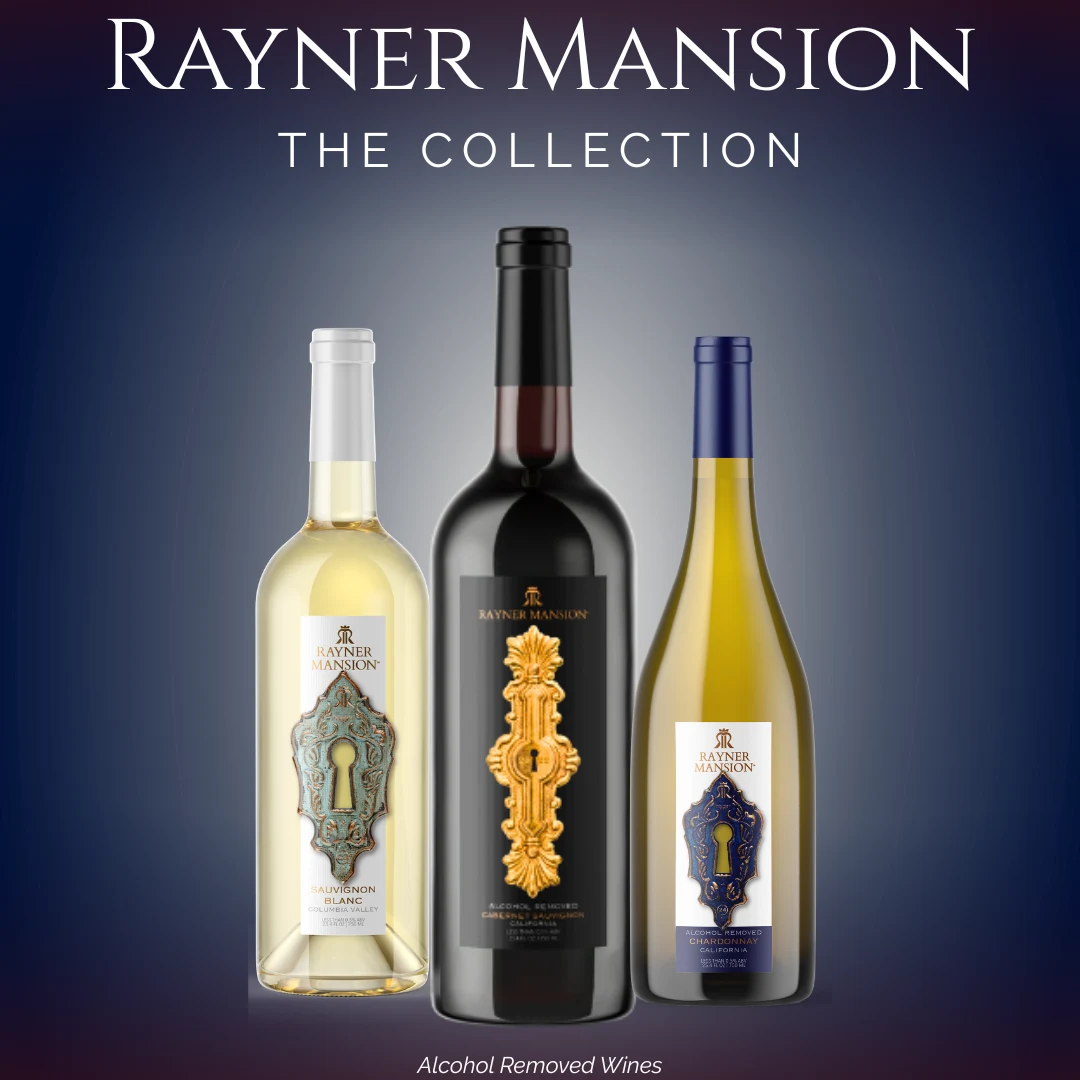
Rayner Mansion’s product pages mark residual sugar clearly where confirmation is still required. That transparency is important because premium guests do not want vague wellness language; they want facts presented with calm confidence.
How to serve a lighter glass well
Temperature and glassware change perception. Serve whites chilled but not frozen, and give reds a slight chill rather than room-temperature warmth. Use stemmed glasses with enough bowl to show aroma. Pair the wine with food instead of judging it alone from a tiny tasting pour.
Avoid turning calorie information into a health claim
Calories can help a guest choose, but Rayner Mansion is not positioned as a health drink. The stronger message is hospitality without compromise: a bottle that lets someone participate in the ritual of wine while receiving accurate information about what is in the glass.
Check each wine before serving
Rayner Mansion product pages include placeholders for confirmed calorie and residual sugar values where final details are pending.
Compare non-alcoholic wine bottlesFeatured internal links
Shop the bottles behind this guide.
Shop non alcoholic Cabernet Sauvignon
A structured California red for savory dinners and formal tables.
Shop non alcoholic Chardonnay
A dry California white for roast chicken, shellfish, and composed lunches.
Shop non alcoholic Sauvignon Blanc
A bright Columbia Valley white for aperitif service, seafood, and celebrations.
Learn how dealcoholized wine and alcohol removed wine are made
Follow Rayner Mansion's fermentation-first process from wine to finished bottle.
Related guides
7 min read
Best Non-Alcoholic Wine: How to Choose a Bottle That Belongs at the Table
A practical guide to choosing premium non-alcoholic wine by style, dryness, structure, food pairing, and occasion.
6 min read
Does Non-Alcoholic Wine Have Alcohol? Understanding Less Than 0.5% ABV
A clear explanation of alcohol levels in dealcoholized wine, labeling language, serving expectations, and pregnancy guidance.